Hand hygiene compliance auditing is conducted to assess the effectiveness of hand hygiene programs in Australia, as part of the National Hand Hygiene Initiative (NHHI). Hand hygiene compliance is assessed across both public and private Australian hospitals, consistent with AHMAC endorsed benchmark of 80 per cent.
Auditing using the HHCApp
The HHCApp is the Commission's web-based application for use by healthcare organisations to collect, review and report their hand hygiene compliance rates.
For settings such as non-acute, primary care and mental health it is preferable to assess other aspects of a hand hygiene program, such as product placement and availability and participation in education. Routine hand hygiene compliance auditing is not recommended in these settings, as there is a low level of staff/patient activity and interaction that will result in a small number of Moments being observed.
All facilities should be aware of their jurisdictional and organisational requirements when planning measurement of their hand hygiene program. A number of audit tools are available that can be used or modified as desired. Hand hygiene compliance audits should only be undertaken by trained and validated Hand Hygiene Auditors or Hand Hygiene Auditor Educators.
Annual audit data submission dates
Health service organisations which are being accredited to the National Safety and Quality Health Service Standards are required to collect hand hygiene compliance data for national hand hygiene audits, unless exempted by the relevant state and territory regulator. Health service organisations should refer to current NSQHS Advisories regarding any changes to this requirement.
Annual audit periods for the NHHI are:
Audit period 1 | 1 November to 31 March |
Audit period 2 | 1 April to 30 June |
Audit period 3 | 1 July to 31 October |
National Audit period 2 became voluntary from 1 April 2023 to provide health service organisations with additional time for quality improvement activities.
Submitting data to the National Audit
The HHCApp is used to enter data which must be submitted by the last day of each audit period.
The hand hygiene lead for each organisation is required to press the 'submit for approval' button in the HHCApp to demonstrate that data collection has been completed. Data submission can be completed at any time in the lead up to the last day of each audit period.
Please note: by pressing the 'submit for approval' button you are closing off the audit for your organisation, which does not allow for further data entry for that audit period. Please read the guidance on how to validate and submit a completed audit prior to submitting your organisation's audit data.
Guidelines for data submission
Guidelines that support submission of hand hygiene audit data by hospitals and some specific clinical settings are listed. These guidelines are intended to ensure all hand hygiene compliance data collected and submitted, as part of the NHHI, is an accurate and reliable representation of a participating organisation's hand hygiene compliance. All organisations submitting data as part of the NHHI are required to follow these guidelines.
Use of Audit data for quality improvement and improved patient safety
The health service organisation must also demonstrate that it uses the results of audits to improve hand hygiene compliance and patient safety.
Guidelines for submission of data for specific settings
Hospitals
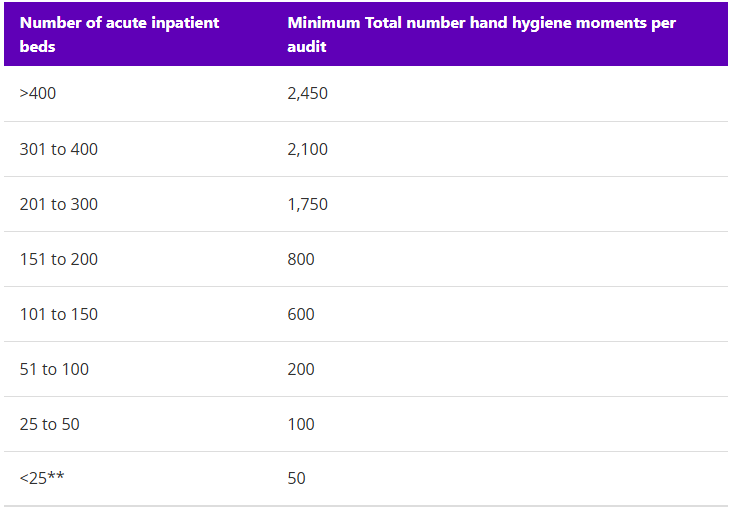
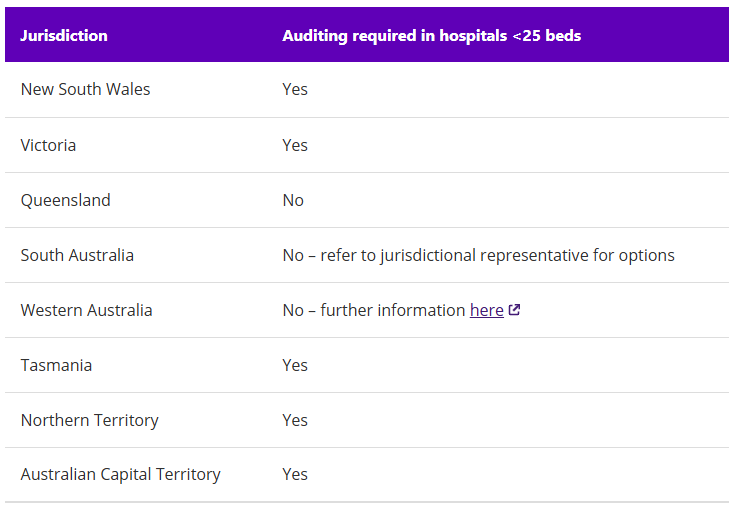
*** Auditing in hospitals with <25 beds is dependent on jurisdictions. See table below.
 Day Hospitals
Guidelines have been developed for stand-alone day hospitals regarding the collection of representative hand hygiene compliance as part of the National Hand Hygiene Initiative.
Day hospitals – guidelines for data collection
To ensure the collection of representative hand hygiene compliance data for the National Hand Hygiene Initiative from freestanding day hospitals, the following is recommended:
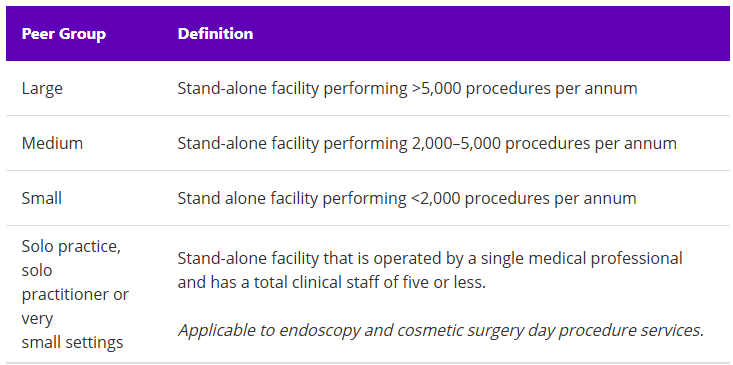
Day hospital size:
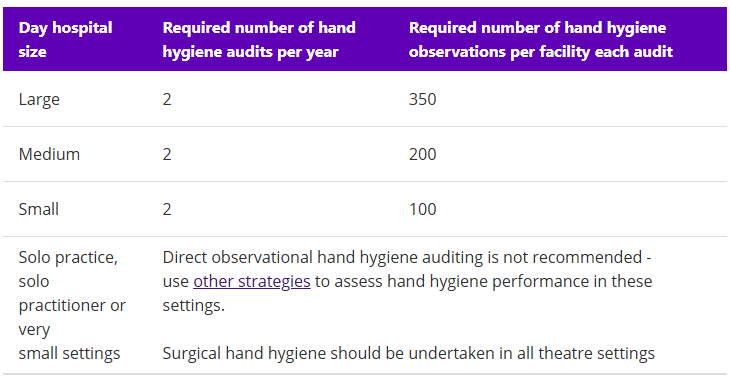
Target number of Moments for day hospitals:
Recommendations:
- Facility Hand Hygiene Project Coordinator to determine facility size, according to peer grouping guidelines above
- Target number of Moments to be collected as per table above, dependent on facility size
- Collection of target number of Moments will be comparable to hospitals of the same peer grouping collecting data in their Day Procedure Unit
- Compliance data to be collected and submitted as per the National Hand Hygiene Initiative website.
Dialysis/oncology
In the dialysis and oncology settings the risk of transmission of infection for all patients and healthcare workers is high due to repetitive invasive procedures and blood handling. It is extremely important to meet the requirements for optimal hand hygiene, despite the high number of opportunities for hand hygiene.
Dialysis/oncology centres – guidelines for data collection
To ensure the collection of representative hand hygiene compliance data for the National Hand Hygiene Initiative from stand-alone/satellite dialysis/oncology centres*, the following is recommended:
Dialysis/oncology centre size:
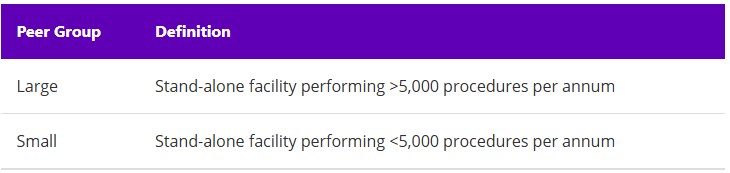
*adapted from the Australian Hospital Peer Groupings, AIHW 2008
Target number of Moments for dialysis/oncology centres:
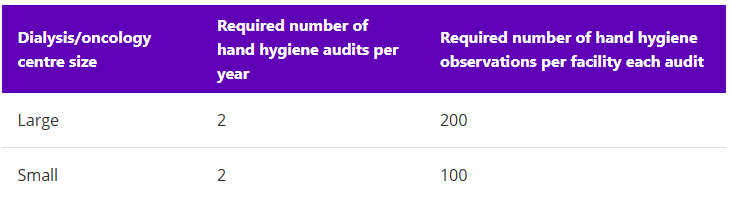 Organisations should refer to their jurisdictional requirements
Recommendations:
- Facility Hand Hygiene Project Coordinator to determine facility size, according to peer grouping guidelines above.
- Target number of moments to be collected as per table above, dependent on facility size.
- Collection of target number of Moments will be comparable to dialysis centres of the same peer grouping
- Compliance data to be collected and submitted as per the National Hand Hygiene Initiative website.
* A standalone or satellite dialysis or oncology centre is one which is physically separate to a healthcare facility with other areas requiring HHC data collection.
# A healthcare facility with a dialysis or oncology ward is required to collect HHC moments for that ward as per the Guidelines for Data Submission Hospitals.
Several resources specific to these settings have been developed to provide guidance on hand hygiene practices as well as guidelines regarding the collection and submission of data as part of the NHHI.
Dental facilities
Where sites deem hand hygiene auditing to be appropriate, the following information provides guidance regarding the collection of representative hand hygiene compliance data by solo, group and hospital based dental services as part of the National Hand Hygiene Initiative.
Dental service description:
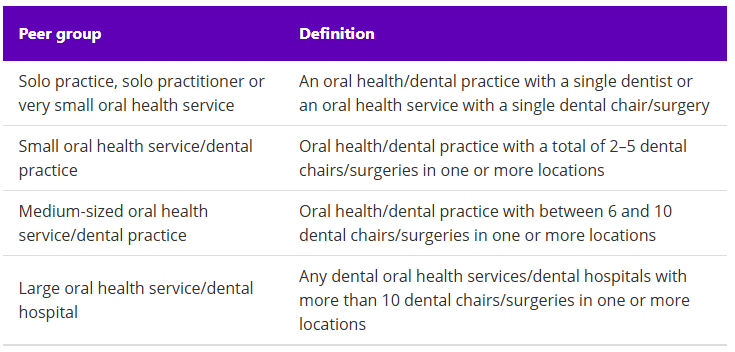
Suggested target number of Moments for oral health/dental services:
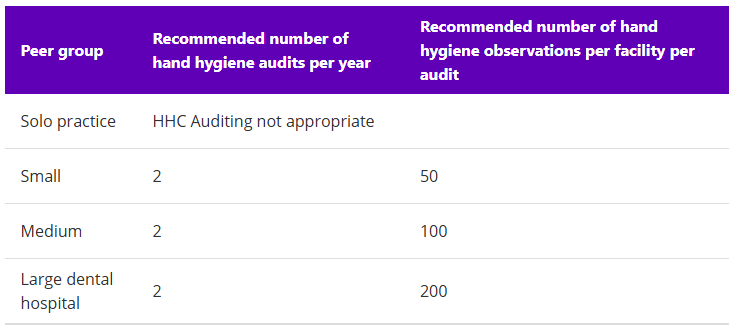
Organisations should refer to their jurisdictional requirements
Recommendations:
Facility Hand Hygiene Project Coordinator to determine facility size, according to peer grouping guidelines above. If a dental service makes the decision to perform hand hygiene compliance auditing by direct observation, the target number of Moments to be collected is provided in the table above, dependent on facility size. Collection of target number of Moments will be comparable to oral health services of the same peer grouping. Compliance data is to be collected and submitted as per National Hand Hygiene Initiative website.
Data validation
Data validation must be completed by hand hygiene leads before final submission of data to the NHHI.
While an audit is active in HHCApp, changes can be made to data if errors are found. Once an audit has been submitted and the status in HHCApp is “pending approval”, then changes can only be made after discussion with your jurisdictional coordinator, or by contacting the NHHI Helpdesk.
Final submission of data by the hand hygiene lead provides confirmation that the data has been reviewed and accepted by the organisation.
Please review the NHHI HCCApp FAQs for detailed guidance on how to conduct validation of your data. In summary, hand hygiene leads should review the following:
- Correct number of Moments reported for the organisation
- Correct number of Moments reported for each eligible department
- Data were collected by currently validated Hand Hygiene Auditors only
- Auditor hand hygiene compliance is appropriate for the area audited
- Observations were conducted in clinical settings
- Moments observed were appropriate for healthcare worker type
All outlier data should be investigated by the hand hygiene lead prior to submission.
Was this article helpful?
That’s Great!
Thank you for your feedback
Sorry! We couldn't be helpful
Thank you for your feedback
Feedback sent
We appreciate your effort and will try to fix the article